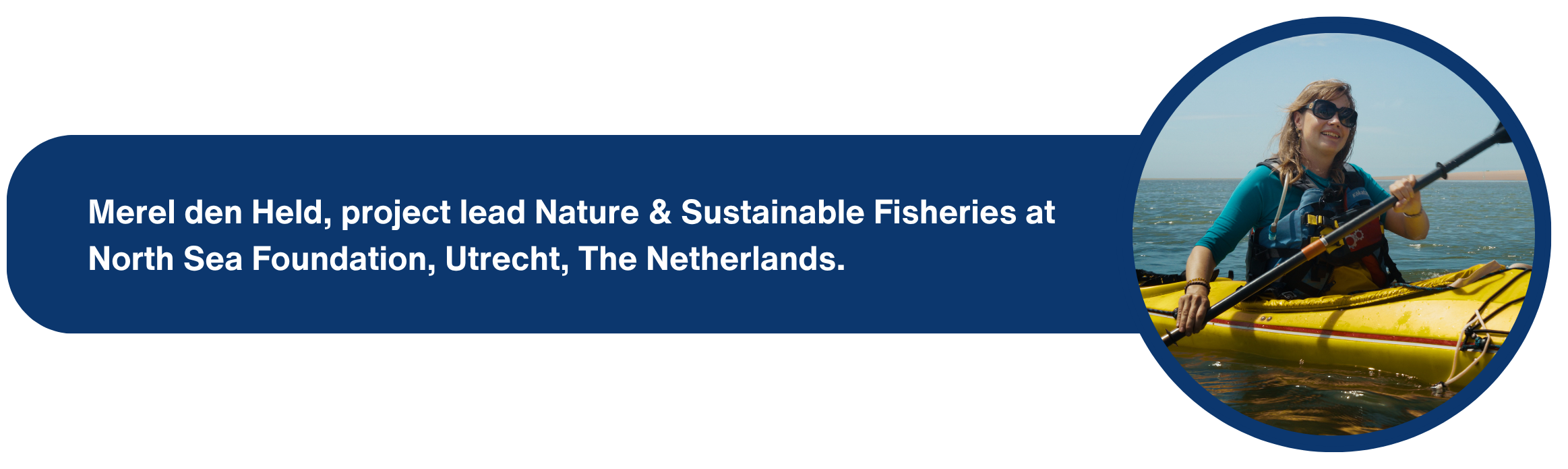
What does your role with the North Sea Foundation involve, and what was your journey to get to where you are now?
My role at the North Sea Foundation (SDN) focuses on protecting marine life and reducing the environmental impact of fisheries, with a special emphasis on bycatch. In my very first week there, I had the pleasure of joining the kick-off of the CIBBRiNA project, where I had the chance to meet almost all of the project partners and step into my role as co-lead for Work Package 10.
My connection to the sea goes back to my childhood. I grew up near the coast and spent countless hours exploring tidal pools and beaches. I was fascinated by pipefish, tiny plaice, shellfish – yet also worried about animals that died from easily preventable causes. That early mix of wonder and concern led me to study Coastal and Marine Management, followed by Marine Living Resources Management in Wageningen.
During my internships, from whale and dolphin work in the Azores to seabed ecology at the Royal Netherlands Institute for Sea Research (NIOZ), I learned not only about marine ecosystems but also about the people who depend on the sea. Fisheries in particular intrigued me because I’ve always felt a bit of envy toward those who experience the sea up close every day – never the same, always surprising.
After graduating, I worked for several environmental organizations – including Friends of the Earth, the Good Fish Foundation, and the Aquaculture Stewardship Council – mainly in international communication roles. Eventually, I returned to where my heart has always been: our own North Sea. That path led me to the SDN, where I now combine marine science, communication, collaboration, and policy work to help safeguard our marine environment.
What are your reasons for optimism when it comes to work on bycatch?
Although bycatch of endangered, threatened, and protected species in the North Sea remains a serious and urgent challenge, there are several reasons to be hopeful.
Firstly, we now see a clear shift toward coordinated, large-scale action. Instead of scattered, isolated projects, initiatives like CIBBRiNA bring together countries, sectors, and experts in a structured, cross-border approach. That alone is a major step forward. Secondly, collaboration between stakeholders has improved greatly. Fishers, scientists, NGOs, and policymakers now work together in ways that were rare just a few years ago. This shift – from working around fishers to working with them – is transformative.
A core obstacle in the past was the lack of fisher involvement in designing measures, as well as actually using them. That is changing rapidly. In CIBBRiNA and other initiatives, fishers are actively contributing to monitoring programs, mitigation trials, and testing new technologies. Trust is slowly being built, and that is key.
This growing cooperation means that feasible, widely supported solutions are now within reach. It also accelerates scientific and technological progress, making the step from research idea to practical application far more realistic.
Finally, strong policy drivers like the EU Biodiversity Strategy 2030 and the LIFE programme have explicitly prioritised bycatch reduction. With political momentum, scientific innovation, and industry engagement all moving in the same direction, there is more reason for optimism than ever.
What is one unforgettable “ocean moment” for you?
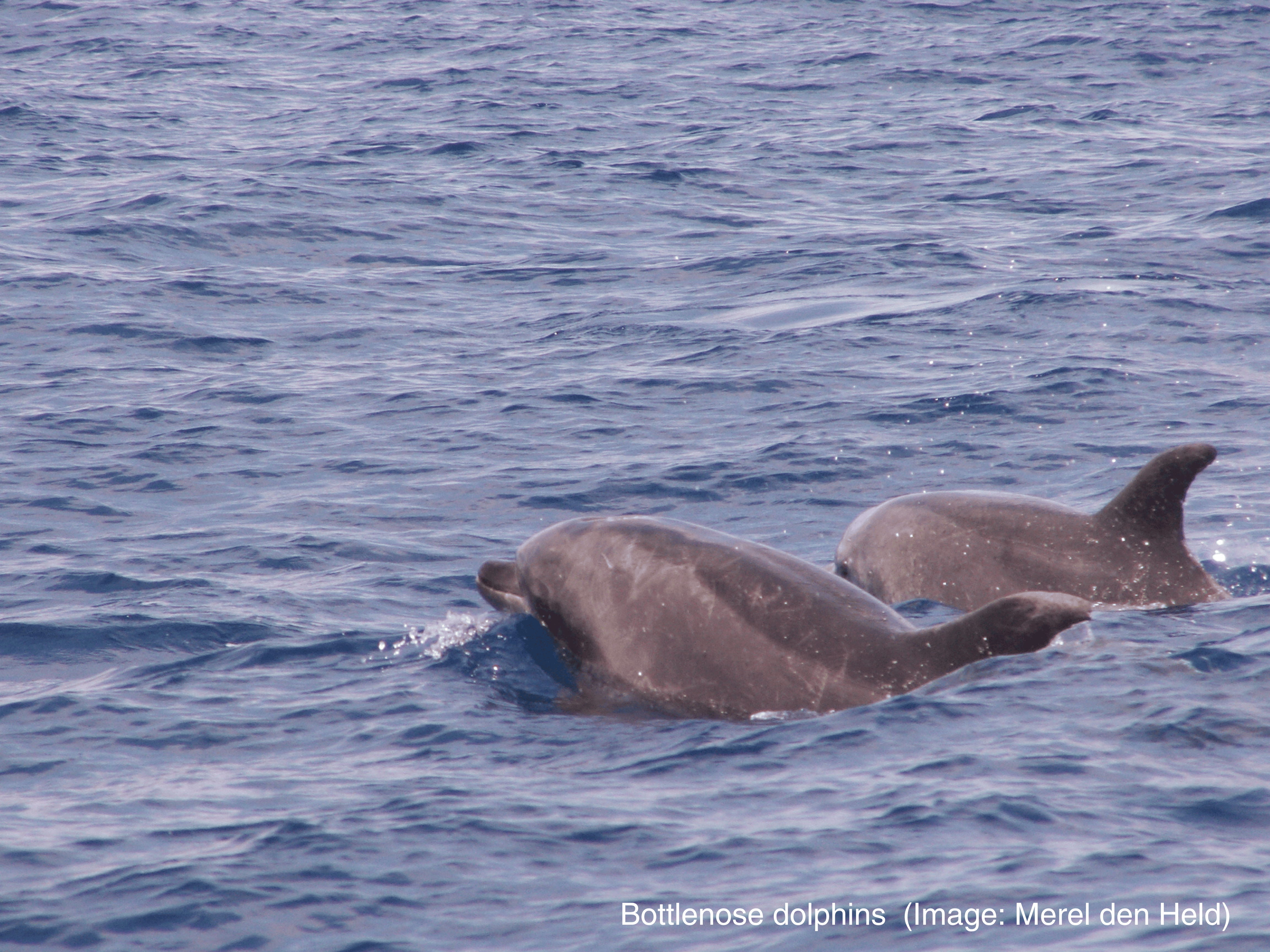
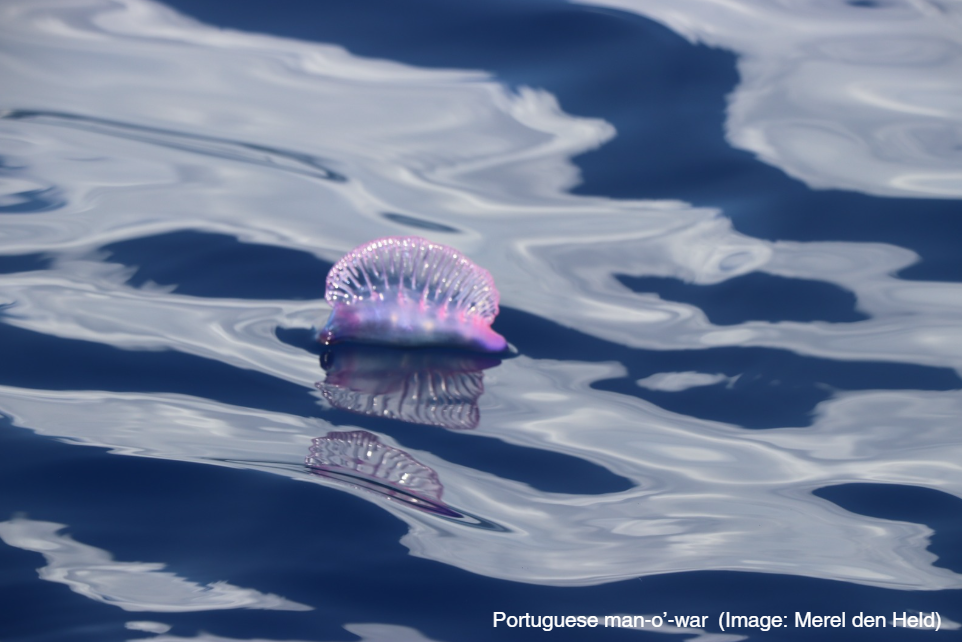
I have many, but one that will stay with me forever happened during my internship in the Azores. For our research, I spent a season joining whale-watching trips. Alongside the incredible encounters with whales, dolphins, flying fish, and Portuguese man-o’-war, there was one moment that felt almost surreal: we jumped into the water a few miles off the island. The Azores rise steeply from the deep ocean, so once you’re offshore, there are suddenly kilometres of water beneath you. Floating there – with the water underneath me turning darker and darker through my snorkel mask, and sunlight glimmering off schools of young fish – was unforgettable. I couldn’t help wondering what might be gliding through the depths underneath me.
Another unforgettable experience to mention is kayaking on the North Sea. Contrary to what you might think, you’re not alone. The curiosity of grey seals as they follow and watch you – popping up in different places every minute – is both thrilling and funny. At the same time, you’re aware of how big and powerful they are compared to your small kayak.
“Floating there – with the water underneath me turning darker and darker through my snorkel mask, and sunlight glimmering off schools of young fish – was unforgettable.”
What are some key learnings from your role in CIBBRiNA so far?
One of the most valuable aspects of my involvement in CIBBRiNA has been the genuinely collaborative spirit within the project. Working closely with fisheries, governments, scientists, and NGOs from across Europe has shown me once again how powerful it is when diverse perspectives come together around a shared goal. The regular meetings have allowed us to build trust, understand each other’s viewpoints more deeply, and recognise the realities each partner operates within. This mutual understanding makes it far easier to develop solutions that are not only effective, but workable for all sides involved. The carefully designed agreements on how we collaborate have played an important role in guiding this process and keeping us aligned. Looking ahead to the second half of the project, I hope to take on a more active role in the case studies I am involved in—the demersal and pelagic North Sea case studies—and to contribute even more directly to the practical, on-the-ground work that CIBBRiNA is enabling.
Read more about the team behind CIBBRiNA in our newsletter, which you can subscribe to here.