Compared to lab settings, science looks very different at sea. In this blog post, fisheries researcher Lina de Nijs from the Pelagic Freezer Trawler Association shares a snapshot from recent trials conducted as part of CIBBRiNA’s Case Study 7. She collects footage and acoustic data from nets which have been adapted as part of efforts to trial bycatch mitigation measures.
What are you doing during these onboard trials for CIBBRiNA?
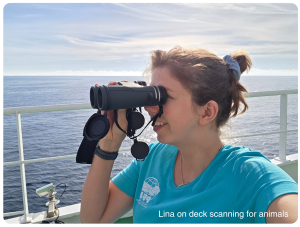
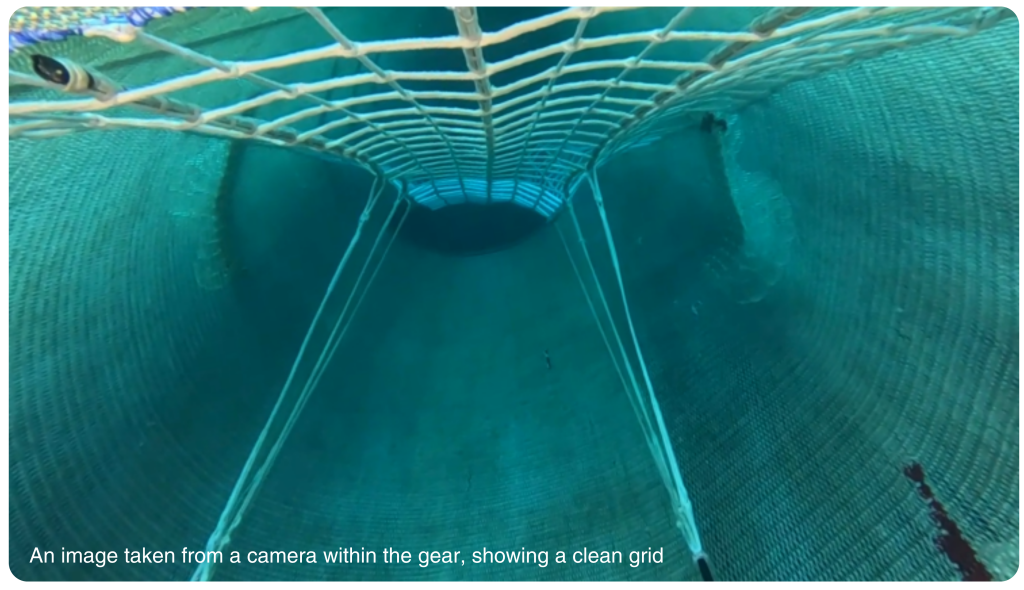
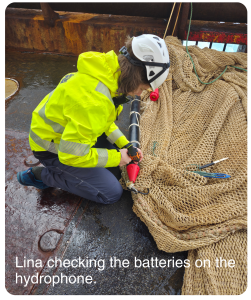
Primarily we are working with camera equipment placed inside the net, to see how endangered, threatened and protected (ETP) species behave. We monitor and analyse the footage from these cameras, and discuss our observations with the bridge crew to get their insights and look at ways we can improve our approach as we go along. When bycatch occurs, we identify it and train crew members to confidently identify species themselves. We also use a 4-channel hydrophone (an underwater microphone that records sound) attached to the gear which collects acoustic data to tell us whether echolocating animals are near the vessel. While doing all this, we carefully observe surrounding waters to check for the presence of marine mammals and other ETP species, making sure to take lots of photos of our work and any animals that may have been caught.
What was the goal for these trials?
To develop effective solutions, we must first understand how ETP species behave within the gear, and camera footage is invaluable to this research. By observing how species encounter modified gear, we can determine whether their escape is smooth or if the gear requires further adjustments. When testing new designs, we must ensure they fit properly without obstructing routine fishing operations, and assess how these measures can be applied to a range of different ETP species. Having “eyes” inside the gear really helps drive innovation and allows us to develop effective measures, with our hydrophone recordings acting as our “ears” to help us determine the distance of animals from the netting.
What is your favourite part about collaborating with the crew?
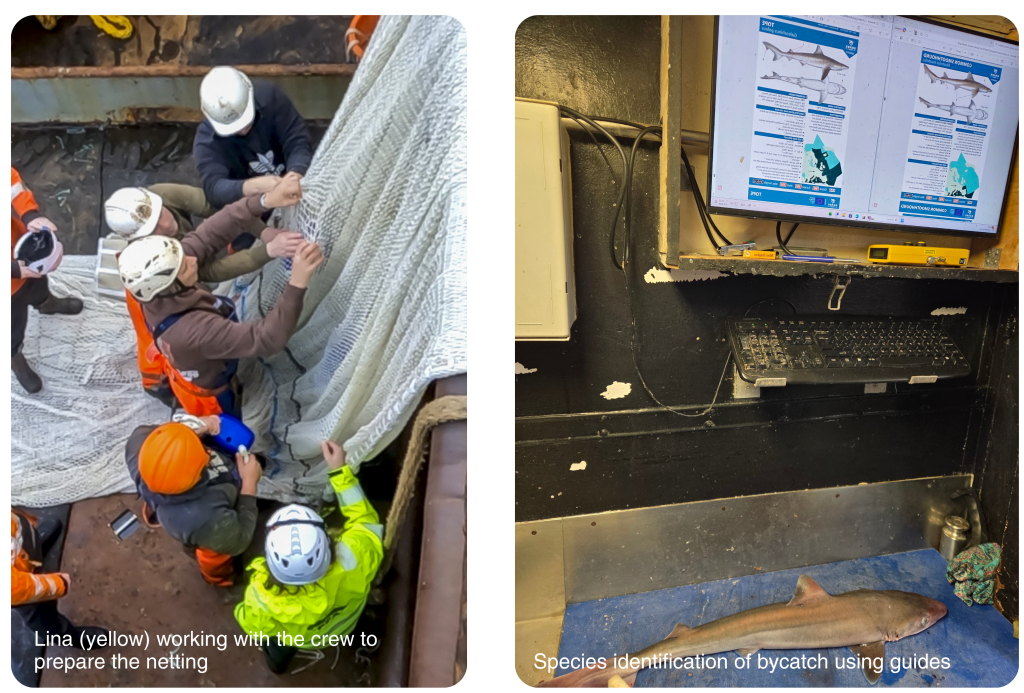
This work would be impossible without the crew’s dedication and support. My favourite part of this collaboration is our shared enthusiasm and the lessons we can learn from one another. While I know the best placement for the hydrophone or camera, I rely on the crew to secure them within the gear, and their expertise with hooks and knots allows us to combine our strengths and achieve the best results. Because nets vary significantly, the process is iterative: we establish a starting point, analyse the initial footage, and make minor adjustments to the mountings to improve the shot.
Although bycatch incidents are rare in this fishery, especially when the grid is deployed, accurate identification remains essential when they do occur. Seeing the crew so enthusiastic about correctly identifying animals and challenging each other to document bycatch correctly is so rewarding!
What does an average day look like for you and your team at sea?
An average day during a CIBBRiNA trial trip often starts somewhere between 7 and 9 in the morning, although this depends on fishing activity. Starting early let us make improvements to how we mounted the cameras inside the gear. Throughout the day I also check the hydrophone to change the batteries and offload the data it has collected. In the afternoon, I frequently visit the factory to see what they have been processing, and whether they found any bycatch on the sorting belt. If there was any bycatch, I work with the quality manager to determine which species it was. We usually started fishing again just after sundown, when I would focus on acoustic data!
What were some interesting observations you made, and were there any surprises?
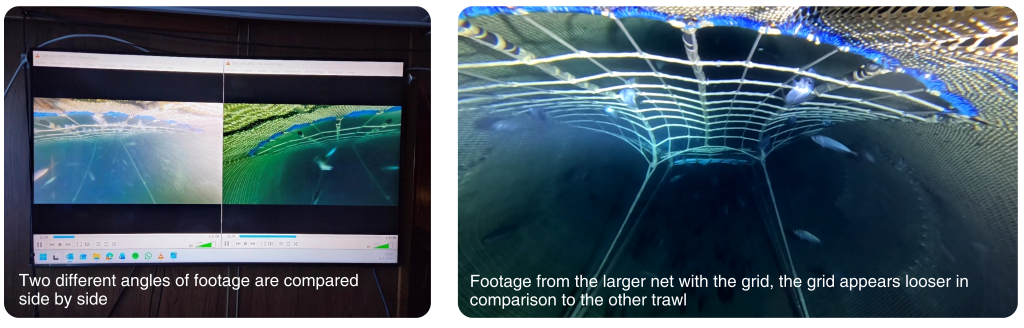
What I found interesting was how differently the grid-device behaved in different nets. We fished with two nets, and compared footage later on; with the smaller net, the grid stood perfectly, but when used in the larger net, the grid was not stretched out all the way. In practice this means that some ETP species might get stuck more easily – crucial information that we wouldn’t know without the use of our cameras!
What was really valuable for me was looking at the images with the skipper, as he has a completely different perspective and focuses on different aspects. While I’m thinking about species behaviour, and whether the device is functioning, the skipper looks at all the different sides of the net, to check the water flow. By working together and discussing what we see, I learn new things and gain more insight into what’s important for the fishers.
What are the next steps once these trials are complete?
Our next step is to continue these trials, and I’m really looking forward to doing that together with colleagues from Denmark, Scotland, and Ireland. We’re all working toward the same goal — reducing bycatch of ETP species — but each country brings its own fishing practices, gear types, and local knowledge to the table, which is incredibly valuable. By sharing what we observe across different fleets and conditions, we can figure out much faster what works and what doesn’t, and why. Every camera recording, every hydrophone dataset, every conversation with a skipper or crew member adds a small piece to that bigger puzzle. It’s a long road, but moments like seeing a crew member proudly identify a shark species remind me exactly why this work matters.
Keen to know more about Case Study 7 and our other work? Go to http://cibbrina.eu/our-work/