Educating future generations on the threats to our ocean and the different solutions to address them is crucial. In this blog post, we explore CIBBRiNA’s work to develop a suite of materials that can be used in schools to teach young people about sustainable fishing, bycatch and the work CIBBRiNA is doing in these areas.
Our new ‘Research Boxes’ bring scientific research into the classroom through guided activities, visual materials, and interactive challenges based on real-world problems. The materials enable students to explore marine biodiversity, fisheries and bycatch in practical and participatory ways, and are designed to be adapted as needed by teachers to fit into school curricula, timetables and teaching approaches.
The Research Boxes include various tasks that encourage students to think about different aspects of CIBBRiNA’s work, such as:
- Species and habitats affected by fishing
- Different types of fisheries, and how bycatch occurs in these
- Different perspectives on bycatch including scientists, fishers, NGOs, and policymakers
- The solutions available to reduce and prevent bycatch
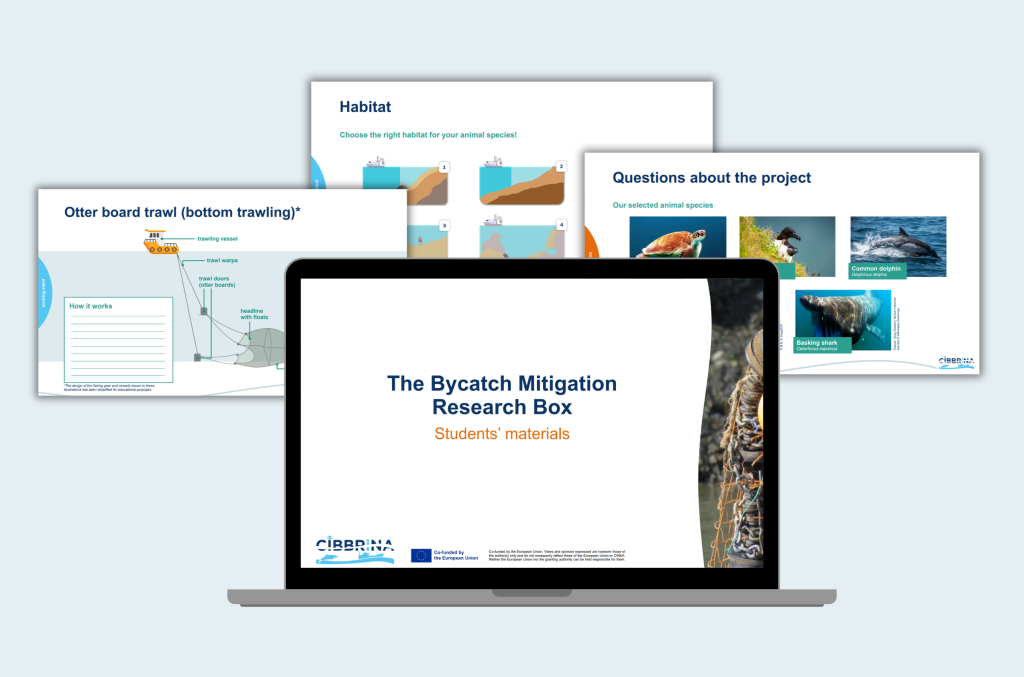
Developing the Research Boxes was a collaborative process involving a diverse range of stakeholders. Partners from the University of Veterinary Medicine, Hanover (TiHo) began by producing a first draft, which the wider CIBBRiNA team were able to contribute to and shape through successive feedback. Social, economic and policy perspectives were integrated, while maintaining an emphasis on the importance of mitigation and collaboration.
“From technical refinement to creative design, the Research Box underwent a rigorous validation process to ensure scientific accuracy, adolescent-friendly engagement, and full alignment with the Life CIBBRINA vision—now proudly endorsed and ready to inspire,” said Rosa Fernandez, co-lead of CIBBRiNA’s work on education and communication.
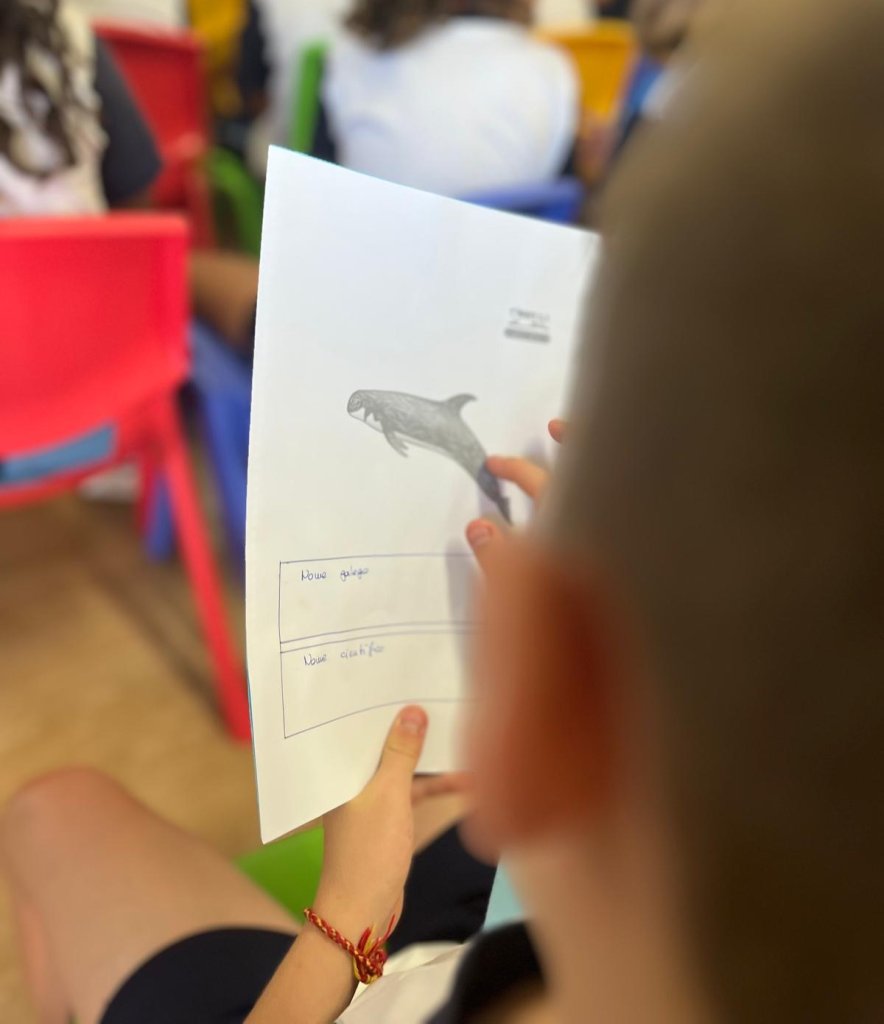
In September 2026, the CETMAR team conducted a successful first trial of the materials in a school in Vigo. Marinha Guizán Cascón presented the materials to over 100 students aged 10-12 years, all of whom responded well to the materials. Experiences from CIBBRiNA’s Case Study 2, which includes the Galician region, provided a local connection for students, showing how fishers, scientists and other partners in their area are working together to find solutions for minimising – and where possible eliminating – accidental catches of Endangered, Threatened and Protected species. Teachers’ feedback was also positive, and many have since introduced the Research Boxes into the curriculum as of this year.
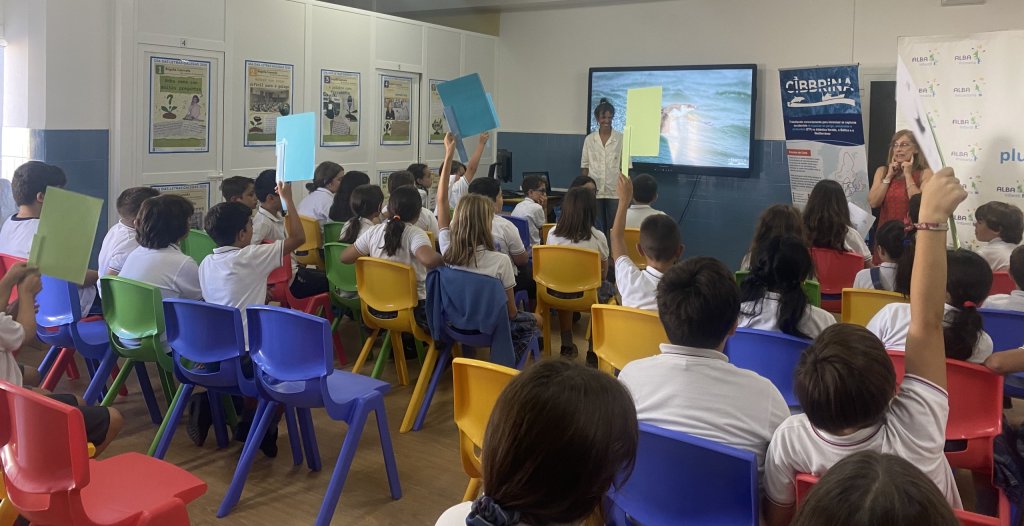
“Seeing how quickly the students became interested in the topic was very encouraging. They responded with great curiosity and thoughtful questions, especially around understanding the world of fisheries a little better to see why bycatch happens. I believe the Research Boxes will help them understand bycatch not as something distant, but as a real challenge linked to their own territory, to fisheries in which some of their relatives work, and to the marine biodiversity they can observe on the Galician coast,” said Marinha Guizán Cascón
The Research Boxes have already been translated into Spanish and Galician, with the plan to translate them into several other European languages too. And over the next few months, the team will introduce the materials into more schools across Spain and beyond, to help as many students as possible learn about fisheries bycatch and the collaborative work being done to prevent it.
Download the Research Boxes here:
- Research Box for students – English
- Research Box for students – Spanish
- Research Box for students – Galician
- Research Box for teachers – English
- Research Box for teachers – Spanish
- Research Box for teachers (Galician)